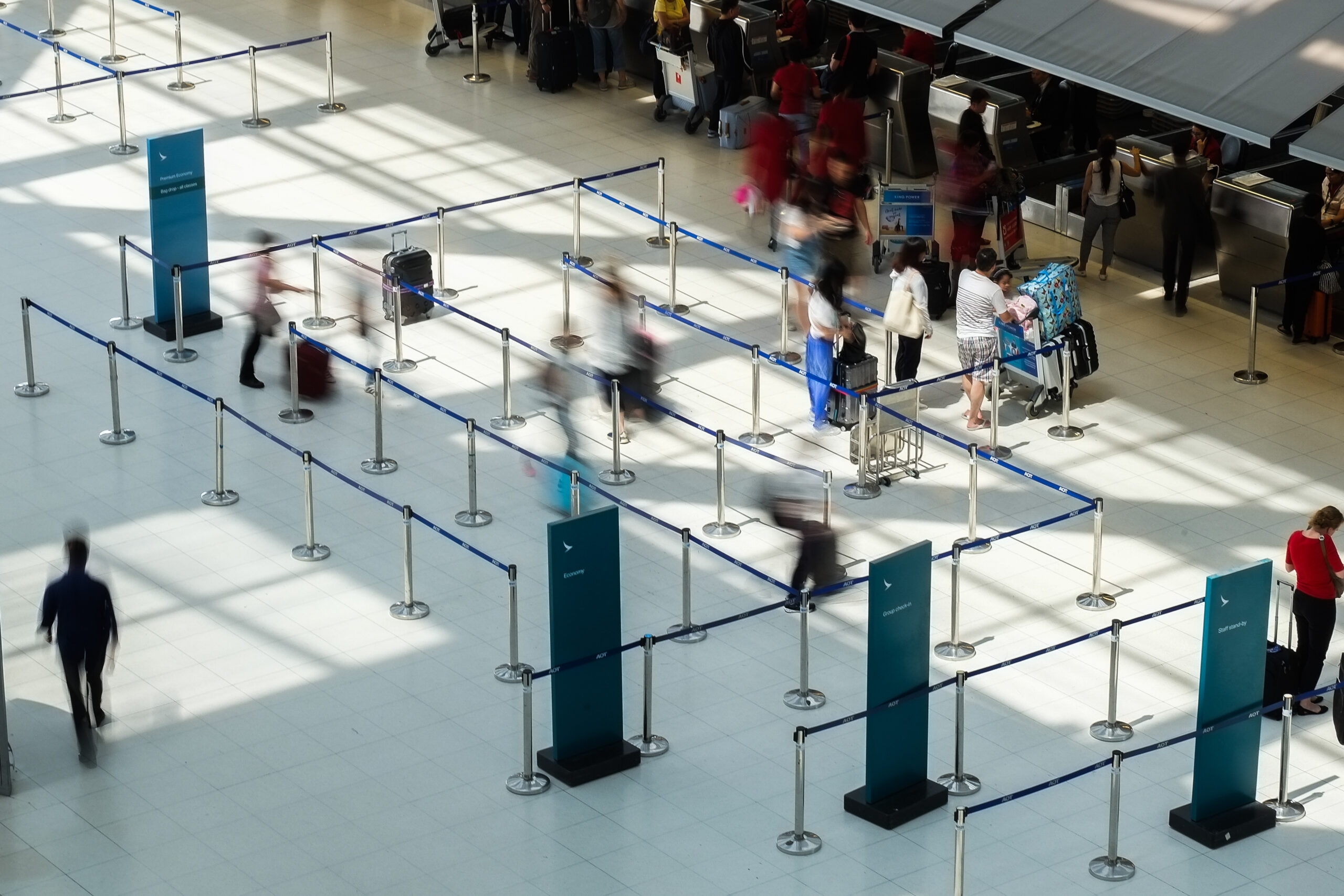
The new EES border controls – the EU’s Exit/Entry System – came into operation on 12 October and is being rolled out progressively over six months. EES stores personal data from non-EU nationals, along with entry/exit details, each time they cross a Schengen border. It does not apply to holders of residence permits and long-stay visas.
The EU’s Entry/Exit System (EES) is an automated IT system for registering non-EU nationals crossing external Schengen borders, and calculating how long they have stayed in the area. It aims to enhance the security of the Schengen area and modernise border checks for greater efficiency.
Importantly, from the EU’s point of view, the EES will prevent irregular migration. By tracking everyone who enters and leaves the Schengen area, along with dates and biometric information, the system will flag anyone who overstays the 90-day limit, misuses visa-free travel or uses fake identities. Tax authorities will also be able to determine if anyone has been living ‘under the radar’ and open an investigation to claim back taxes.
Which countries use the EES?
All 29 Schengen zone countries are implementing the Entry/Exit System.
The Schengen area includes Iceland, Liechtenstein, Norway and Switzerland, along with all EU member states except Cyprus and Ireland. Cyprus is in the process of applying to join Schengen.
How is it being implemented?
EES went live on 12 October 2025 across Schengen countries. It is a gradual implementation over six months, allowing countries time to adjust and implement the system, with full operation everywhere by 10 April 2026.
If you travel over the coming weeks, whether you encounter EES formalities yet will depend on the border crossing. Many countries started with a couple of major airports, perhaps limited to certain times of day, and will slowly roll it out to other airports. Ferry and Eurostar/Eurotunnel terminals have begun implementing the new system for some passengers.
If EES applies to you, the first time you pass through a border crossing point with the checks in place, passport control officers or automated kiosks will register your face and fingerprints. You may also be asked questions about the purpose of your trip, accommodation, spending money and return ticket. Passports may still be manually stamped until the EES is fully operational.
What data is collected and how long is it kept?
The EES collects and stores the following information (in full compliance with data protection rules and rights):
- Your full name, date of birth, etc, as listed in your passport or other travel document
- Your biometric data – facial image and fingerprints
- The date and place of each entry and exit
- Whether you were refused entry
Anyone who refuses to provide biometric data will be refused entry.
The records will be kept on file for three years (one year for family members of EU citizens). If no exit has been recorded, the record will be kept for five years from the date your authorised stay expired.
Who does EES apply to?
The EES applies to all non-EU nationals visiting the Schengen area for a short stay. ‘Short stay’ is classified as 90 days within any 180-day period – longer stays are not permitted unless you have obtained the necessary permit or visa.
Key exemptions apply, including for residence card holders. Property ownership alone, however, does not provide an exemption. UK resident nationals owning a holiday home in a Schengen country are fully subject to EES registration and the 90-day limit.
Who is exempt from the EES?
The Entry/Exit System does not apply to nationals of the countries implementing the EES, or to nationals of Cyprus, Andorra, Monaco and San Marino.
If you hold a legal residence permit or long-stay visa issued by an EU country, the EES does not apply to you. British expatriates living in Spain, France, Portugal, Malta and Cyprus, with the correct residence documentation, are not subject to the EES controls. Non-EU nationals who are immediately related to an EU citizen and hold a residence card are also exempt.
The EES also does not apply to people who are exempt from border checks or who have been granted certain privileges with respect to border checks.
What happens if you overstay?
Non-EU nationals who do not have a legal residence permit or visa are limited to 90 days within any 180-day period, calculated as a single period for all European countries using the EES.
Anyone exceeding the 90 days will be considered an ‘overstayer’. The consequences will depend on that country’s legislation, and can include deportation, fines and detention, and/or being prevented from re-entering the EU in future.
If you can prove that you exceeded the 90 days due to unforeseeable or mitigating circumstances (eg, hospitalisation), your data can be amended in the system.
What about those without valid residence cards or tax residency?
Expatriates must navigate two distinct types of residence, each with its own set of rules and implications:
- Lawful residence refers to your legal right, as a national of one country, to live and work in another. Ensure your residence card, permit or visa is kept up to date.
- Tax residence – the country which has taxing rights over your worldwide income, gains and wealth. If you meet the criteria for tax residency in a country, you are required to register with the tax authorities and submit the appropriate returns.
Failing to comply with either can lead to serious consequences, ranging from deportation to tax investigations, backdated liabilities and penalties.
In the past, it may have been easier to live ‘under the radar’ and avoid declaring tax residency. Today, however, the landscape has changed significantly.
Countries such as Spain, France, Portugal, and Cyprus apply the 183-day rule to determine tax residency. If you spend more than six months a year in one of these countries, or meet other residency criteria, you are legally obliged to declare your worldwide income and gains. Residents of Spain and France are also required to declare their total wealth or real estate assets respectively.
With the introduction of the Entry/Exit System (EES), authorities now have access to detailed records of non-EU nationals entering and leaving the country. These automatic records make it easier to identify individuals who overstay or fail to meet their tax obligations. Those found in breach may face investigation and enforcement action.
What should you do now?
If you’re a British expatriate with valid residence documentation, the new EES rules won’t affect your day-to-day travel.
However, anyone who does not have a current residence permit, and/or has not correctly declared themselves for tax, should seek professional advice immediately to regularise their status and avoid escalating consequences.
If you own a holiday home or frequently visit countries like Spain, France, Portugal, Malta or Cyprus, it’s now essential to keep track of your time in the Schengen zone. Overstaying the 90-day limit could lead to fines, deportation, or future travel restrictions.
For those considering a move to the EU, the idea of becoming tax resident can feel daunting—but it doesn’t have to be. With the proper planning, tax residency can actually improve your financial position. Many British nationals have found that relocating with our expert guidance has helped them reduce tax on pensions, investments and savings.
Whether you’re unsure about your current status or thinking about making a permanent move, we’re here to help. Blevins Franks can guide you through the legal and tax implications, ensure your affairs are in order and tax-efficient, and help you make the most of your new lifestyle abroad.
Get in touch today
This article is based on our understanding of the EU and UK border control rules, and is for general information purposes only. If you need clarity on your position, seek advice from official EU or UK sources